

Scottish Loch Legends: Each-uisge, Kelpies and Water Horses Explained
Scotland's lochs and rivers are haunted by water horses — the kelpie, the each-uisge and their regional kin. Here's how the legends differ, and what they warn about.
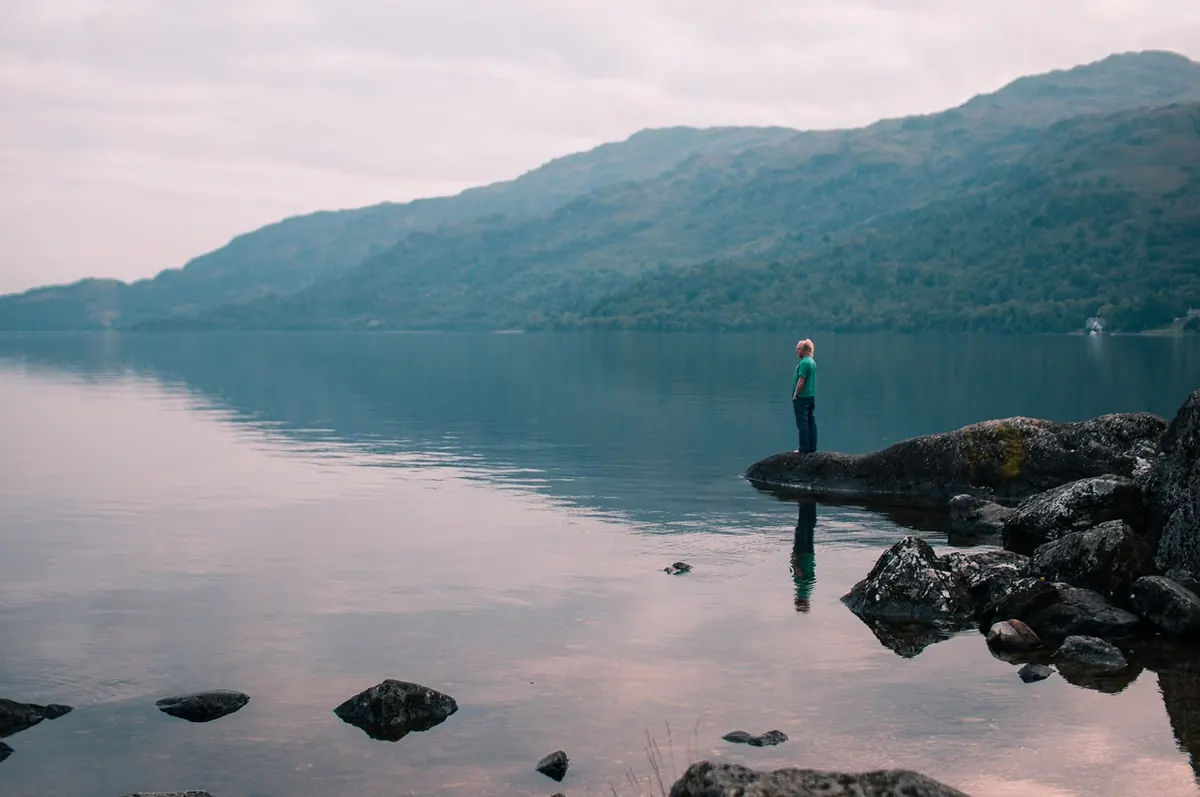
Nearly every Scottish loch has a story about a horse in it. Not a real one, though you will often see ponies grazing the shore. A creature that looks like a horse and is emphatically not one, which has drowned more people in the telling than any real current. The water horse goes by several names, and the differences between them are worth knowing — partly because they reveal what each region feared, and partly because the stories are very good.
Water horse, kelpie, each-uisge: one beast, three names
The broad English term is water horse, and it covers the lot. In Scottish Gaelic the creature is the each-uisge — literally "water horse", with the same uisge that appears in uisge-beatha, the "water of life" we now call whisky. That is a useful clue to how these stories work. Water gives life and takes it, and the legends are less about monsters than about that bargain.
Over centuries of retelling, the water horse split into two broad characters: the kelpie, mostly at home in rivers, mill pools and Lowland lochs, and the each-uisge, the Highland version that kept the older, grimmer reputation. Some tellings blur them together, and collectors in the nineteenth century often used the names interchangeably. Treat the distinction as a guide rather than a rule.
The kelpie: the shape on the shore
A kelpie is usually black, sometimes white or grey, and always described as finer than any farm animal — sleek, well-fed, with a mane that moves like weed in a current. It is most often seen at dusk, standing quietly at the water's edge with its head down, as if waiting to be caught.
That is the trap. Mount it and your hands stick to its hide. It bolts for the loch, and neither of you comes back. In many versions the tell-tale is in the details: waterweed tangled in the mane, wet sand in the coat, hooves that face the wrong way, or a coat that never quite dries. A captured kelpie's bridle was said to be a precious heirloom, and families who claimed to own one told of a servant that would carry impossible loads — until it was freed.
The best-known cautionary tale comes from Angus. A laird's men caught a kelpie and forced it to haul stones for a building, then released it. As it left, it is said to have spoken a curse. In one recorded version:
Sair back and sair banes,
Carryin' the Laird o' Morphie's stanes;
The Laird o' Morphie'll never thrive
As lang as the kelpie's alive.
The laird's line, the story goes, never prospered again. It is a neat illustration of the older belief: you may use the water horse, but you cannot keep it cheaply.
The each-uisge: the one you do not ride
The each-uisge is the kelpie's Highland cousin and considerably worse company. It shifts shape more freely — a pony, a great shaggy horse, a handsome man who charms women down to the water, even a bird. Its coat is sticky the way a kelpie's is, and its breath is said to smell of the sea.
Where the kelpie is often mischievous, the each-uisge is simply lethal. Stories from the west coast and the islands describe it luring children onto its back, a whole group at once, before taking them under. In the grimmest tellings, only the liver floated afterwards. A boy who escaped is usually the one who sensed something wrong and slipped away before the rest climbed on. The survivors in these tales are not braver than the others; they are more suspicious, which is the point.
The traditional escape, if you are already stuck, is desperate: cut away whatever part of you is fastened to the hide and get clear of the water. Most versions make it clear that this is a last resort, not a plan.
Telling them apart: a quick checklist
- Home: kelpies favour rivers, burns, mill ponds and Lowland lochs; the each-uisge belongs to deep Highland lochs and the sea.
- Temperament: the kelpie will trick you; the each-uisge will simply kill you.
- Shapes: the kelpie is a horse, occasionally a person; the each-uisge adds birds and a particularly persuasive human form.
- The warning signs: weed or sand in the mane, a coat that never dries, hooves pointing the wrong way, and any horse standing alone at a lochside at dusk.
- The rule that never changes: never touch a horse you did not lead there yourself.
Regional variants and neighbouring cousins
Scotland kept the legends local, and each place gave the beast its own habits. In Shetland the water horse is the njuggle, said to haunt mill pools and to be owed the last sheaf of the harvest. In the Gaelic heartland there is also the tarbh-uisge, the water bull, a rarer and less murderous creature sometimes said to mix with ordinary cattle — a story that may have grown up around bulls that wandered into lochs.
The idea travels well beyond Scotland. The Isle of Man has the cabbyl-ushtey; Wales has the ceffyl dŵr; Ireland has its own water horse traditions, tangled up with the púca. Even Loch Ness belongs here: long before anybody said "monster", the thing in the water was described as a water horse, and Loch Morar's Morag was described in much the same terms. The modern sea-serpent story is a newer coat over a very old animal.
What the warnings actually encode
Read past the horror and the practical advice is plain. Scottish lochs are cold, deep and often drop away sharply just a few steps from the shore. Cold water shock can hit even a strong swimmer within seconds, and many lochs have no lifeguards, no phone signal and no easy way out.
The legends were how communities passed on that knowledge to children long before warning signs existed. Note what the stories discourage: going to the water alone, going at dusk, trusting something beautiful at the shoreline, letting a group all climb on at once. Every one of those is a genuine drowning risk, dressed up as a horse.
They also carry a quieter warning about strangers and charm — the handsome man at the lochside, the fine animal that seems tame. The old storytellers understood that the most dangerous thing at the water's edge is usually the thing that looks like it wants to be approached.
Visiting these stories yourself
If you want to meet the water horses properly, go to the places that kept them. Loch Morar, the Angus glens around Morphie, the sea lochs of the west, Shetland's mill burns. Read the landscape as the storytellers did: notice where a river narrows, where a path runs close to deep water, where a burn feeds a mill.
Then treat the real water with the respect the legend demands. Check local conditions before you swim, avoid lochs alone, keep children within arm's reach near any shore, and remember that a loch does not need a monster in it to be dangerous. The kelpie is a story. The cold, the drop-off and the undertow are not. Enjoy the tales, then walk home the long way, on dry land, and tell them to somebody else.
Photo: TessaMannonen / Pixabay