A Beginner's Checklist for Reading Primary Sources in Mythology
How to choose a translation, check an edition, weigh a text's context and sidestep the misreadings that catch most newcomers to ancient mythology.
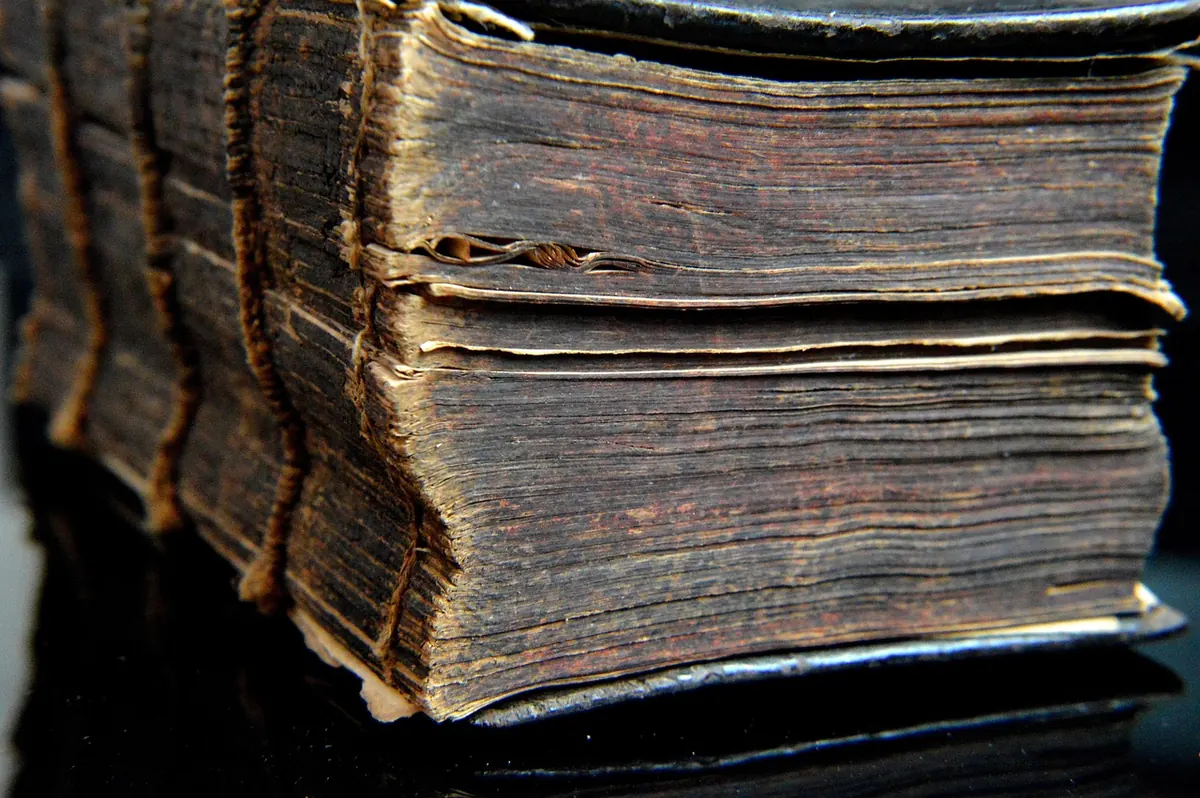
There is a particular disappointment that comes from sitting down with a mythological text and feeling nothing: the names are familiar, the stories seem thin, and it reads like a dull summary of something better. Usually the myth is not the problem. The edition is. A retelling has been passed off as a translation, or a Victorian rendering has gone stiff with age, or the notes that would have made sense of it have been stripped out to save paper.
Reading these texts well is a learnable skill, and it starts before the first page of the story. What follows is a working checklist: what to inspect in the copy you are holding, what context is worth knowing, and which reading habits quietly lead people astray.
Inspect the edition before you read a word
Turn to the title page and the copyright page. You are looking for four things: who translated it, when, whether it is complete, and what apparatus comes with it. A free scan of an 1890s translation is not worthless, but its diction may be so far from your own that you end up judging the poem rather than the prose. Serious series — Penguin Classics, Oxford World's Classics, Loeb, Dumbarton Oaks — exist precisely to give you a reliable text plus the notes to use it.
Watch for the word retold. Retellings can be wonderful, and some are the reason people fall for these stories in the first place, but they are not primary sources. The same goes for adapted for young readers and for the quiet word selected, which often means a third of the material is missing. If a book gives you no translator's name at all, treat it as a sign.
Choosing a translation: five things to check
- The date. A translation from 1900 tells you as much about 1900 as about the original. Newer is not automatically better, but it is usually plainer.
- Verse or prose. Homer in prose and Homer in hexameters give different impressions. Neither is cheating; know which you have chosen.
- Notes and glossary. Genealogies, epithets and variant names are the hard part of these texts. Good notes are not a crutch, they are part of the edition.
- The translator's preface. Read it and ask what they were trying to do. Fidelity to the metre, to the sense, or to readability? They cannot all be first.
- Whether it is a translation at all. Some popular volumes are modern compositions inspired by older material. That is fine — as long as you know.
Read the introduction twice, and not in the obvious order
Introductions frame everything that follows. If you read one first, you may spend the whole text confirming somebody else's argument about it. Try this instead: skim the preface and the notes on the text, read the primary material itself, then go back and read the introduction properly. You will notice what you missed, and you will have your own impressions to test against the editor's.
Ask not only what the myth means, but what this text is, who made it, and for whom.
Ask who wrote it down, and when
Most of what we call ancient mythology reaches us through a filter. The Homeric poems grew out of centuries of oral performance before they were written down. The Irish and Welsh tales were copied by Christian monks, in monasteries, long after the pagan world that produced them had gone. Snorri Sturluson, our best source for Norse myth, was a thirteenth-century Christian Icelander writing a handbook for poets. Elias Lönnrot's Kalevala is a nineteenth-century composition stitched together from collected folk poems.
None of this makes the texts worthless. It makes them documents, with authors and agendas. Ovid is a witty Augustan poet working in a genre of transformation stories, not a priest recording liturgy. Hesiod writes as a farmer with a grudge and a lesson to teach. Knowing who is speaking changes what you can reasonably claim the text says.
Names, epithets and gods that refuse to line up
Transliteration is a swamp. You will meet Cú Chulainn, Cuchulainn and Cúchulainn in three different books, and Lugh, Lug and Lú in three more. Epithets are worse: the Greek word usually rendered "grey-eyed" for Athena can also suggest bright-eyed or keen-glancing, and each choice colours the goddess slightly. When a name looks unfamiliar, check the glossary rather than assuming it is a different figure.
Be equally careful with the tidy equations. Romans and Greeks linked their gods through what Tacitus called interpretatio romana, and the habit stuck. But Ares and Mars carry very different weight in their own literatures, and a Welsh or Irish figure with a similar role is not simply "the Celtic version" of someone else. Comparisons are useful; they are also leaky.
The misreadings that catch almost everyone
- Assuming a single true version. Myths survive in variants. If Baldr's death or Persephone's abduction differs between sources, that is the tradition working, not an error in your book.
- Reading it as literal belief. A poem is not a creed. Nor is it mere fiction. It sits somewhere more interesting than either.
- Importing modern psychology. Jung and Campbell can be stimulating reading, but they are interpretations, not evidence about what an Iron Age audience thought.
- Trusting a retelling as a source. Films, children's collections and nineteenth-century reworkings are useful, but they are downstream of the texts.
- Treating every detail as sacred symbol. Sometimes a boar is a boar, and sometimes it is a scribal joke.
A checklist to keep by the desk
Before your next text, do five small things. Note the translator and date on the inside cover. Read the preface, skip the introduction until afterwards. Keep a page for names as they appear, with the spelling your edition uses. Mark passages that puzzle you rather than resolving them immediately. And when you finish, write two lines on what surprised you.
That last habit matters more than it sounds. Primary sources reward re-reading, and your own notes from a first attempt are the best guide to what you actually noticed. The myths have survived this long; they will wait while you check the edition.
Photo: AliceKeyStudio / Pixabay