
A Beginner's Guide to British Folklore: Where to Start with Local Legends
A practical starting point for anyone curious about British folklore: the main regional traditions, reliable books and archives, and how to begin researching local legends yourself.

Britain is small enough to cross in a day and dense enough in story that you could spend a lifetime on a single county. Suffolk lanes have black dogs in them. Highland lochs have water horses. Welsh hillsides have fairy courts underneath. None of it is hidden, exactly; it is simply not written down in one place.
The problem for a beginner is not a shortage of material but the opposite. Search for "British folklore" and you surface with fragments of half a dozen traditions, three Victorian retellings and a great deal of nonsense about Druids. What follows is a route through it: where the regional traditions actually sit, which books earn their shelf space, which archives to visit, and how to start on the legends outside your own front door.
Begin with a place, not a subject
Most people start with a subject — fairies, ghosts, witches — and most people get lost. Folklore is stubbornly local. The same tale changes gear at a parish boundary, and a name that carries weight in one valley means nothing in the next one along.
So start with a place. Anywhere you have a reason to care about: the town you grew up in, the village your grandparents came from, the stretch of coast you walk the dog on. Folklore rewards familiarity more than enthusiasm. A stranger with a notebook gets polite summaries; a person who knows which lane floods and which pub closed in 1974 gets the good version.
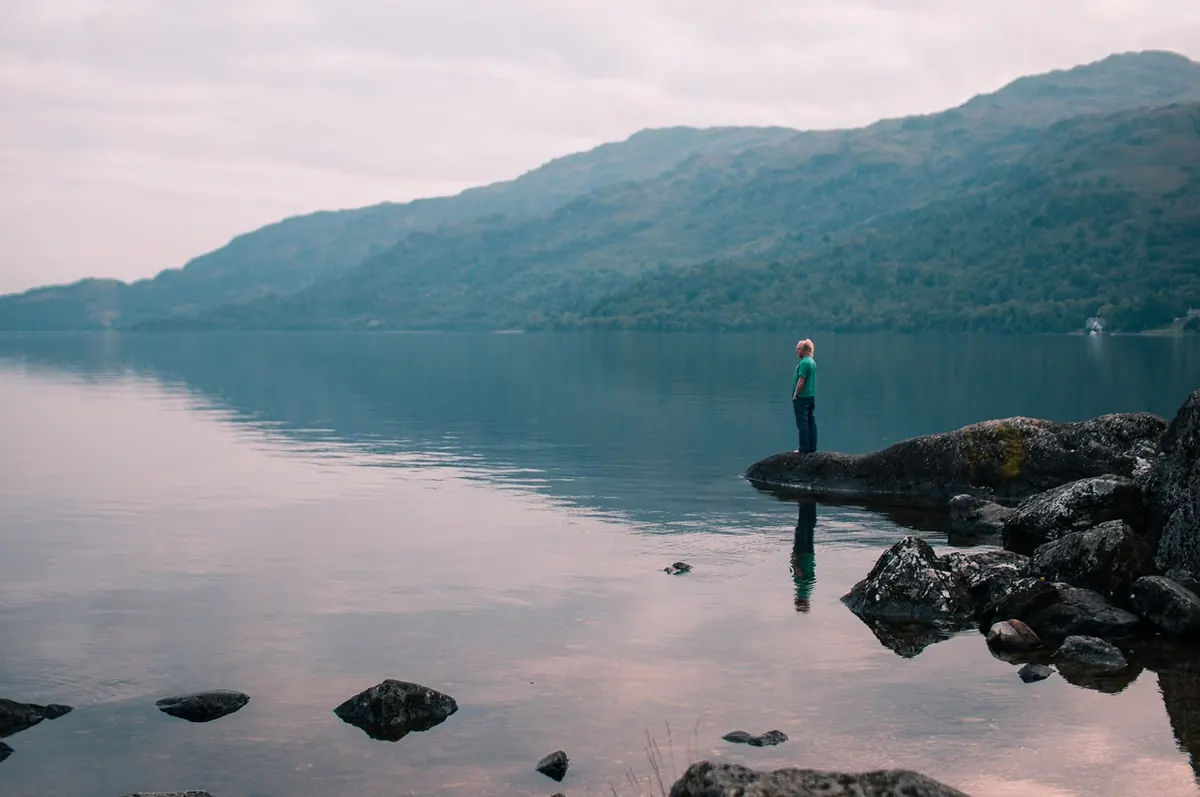
Take the three examples from the opening. Black Shuck, the East Anglian dog "as big as a calf" with eyes like saucers, belongs to a tight cluster of parishes across Norfolk, Suffolk and north Essex, and turns up in church records as well as in retellings. The water horse — the kelpie, the each-uisge — is a Highland and Hebridean figure, a creature you meet at the loch edge and should never, ever mount. The fairy courts under the hills belong to Wales and to the Welsh-speaking parts of the Marches, and they come with rules: don't build on the ring, don't thank them, don't accept the food. Each of those is a local system, not a national one. Learn the system.
A worked example
Choose one parish and see how much is already there. Almost any English village gives you a church with a green man or a sheela-na-gig carved into it; a well, sometime holy, often "wishing"; a crossroads where something was buried to stop it walking; a big house with a family ghost and a disputed heir; a field name that means "gallows" or "goblin"; and a pub sign recycled from an older story. That is five or six separate lines of tradition in a single square mile, and none of them will be in a general reference book. They will be in the county folklore volume, the parish magazine, the local paper's archive, and the memory of a man in his eighties who was told it by his mother.
The traditions you will meet first
Regional character is real, and worth knowing before you go looking, if only so you know what kind of story you have found.
England
English folklore is parochial, administrative and quietly nasty. It clusters around boundaries: parish, county, field, threshold, churchyard. Black dogs, boggarts and hags in the north and east; the Lambton Worm in County Durham; Herne the Hunter at Windsor; the Mermaid of Zennor in Cornwall. The calendar customs are the other half of it — the Haxey Hood in Lincolnshire, the Abbots Bromley Horn Dance in Staffordshire, Padstow's 'Obby 'Oss in Cornwall, mumming plays in the Midlands and the West Country. Most of these are not ancient. Some are nineteenth-century revivals. They are still folklore, because people keep doing them.
Scotland
Scotland's strength is oral narrative, and it survives in extraordinary quantity because it was recorded late and recorded well. Gaelic and Scots tradition gives you the kelpie and the each-uisge, the sluagh and the fairy host, selkies in Orkney and Shetland, trows in Shetland, the broonie who works for cream and leaves when you insult him, Thomas the Rhymer, and the second sight as a matter of serious belief rather than decoration. The School of Scottish Studies recorded farmers, fisherfolk and Travellers from the 1950s onwards, and the results are online. It is the single best sound archive of British folklore in existence.
Wales
Wales has the deepest written record and the most literary one. The Mabinogion gives you a native story cycle centuries older than most of what England can offer, and Arthur's earliest appearances are Welsh and strange — a raiding leader with a retinue of impossibly gifted men, not a king in armour. Add the Tylwyth Teg and their fairy cattle, the Cŵn Annwn, the wild hunt of the underworld, the Lady of Llyn y Fan Fach and the Physicians of Myddfai, and the Mari Lwyd, a horse's skull on a pole that comes singing to your door in January and expects you to answer in verse.
Cornwall, the Isle of Man and the borders
The Celtic fringe repays attention precisely because its traditions were collected by antiquaries before they were prettified. Cornwall has piskies rather than fairies, the knockers of the tin mines, Jan Tregeagle and the mermaid of Zennor — and it lost its own language late enough that some of the stories were still being told in it. The Isle of Man is a small country with an unusually complete folklore: the Moddey Dhoo, the black dog of Peel Castle, and the buggane who tore the roof off St Trinian's Church every time it was rebuilt. The Welsh Marches and the Anglo-Scottish border have their own border logic, in which the raider, the reiver and the fairy are frequently the same figure wearing different hats.
The books that earn their shelf space
You need four or five books, not forty. These are the ones that keep being useful.
- A Dictionary of British Folk-Tales in the English Language — Katharine Briggs (four volumes, 1970–71). The reference work. If you buy nothing else, buy this, or at least use it in a library.
- The Lore of the Land — Jennifer Westwood and Jacqueline Simpson (2005). England, county by county, legend by legend, with sources. The best single starting point in print.
- The Lore of Scotland — Westwood and Sophia Kingshill (2009). The same treatment north of the border.
- The Stations of the Sun — Ronald Hutton (1996). Calendar customs, and a necessary corrective to almost everything you have read about "ancient pagan festivals".
- The Penguin Guide to the Superstitions of Britain and Ireland — Steve Roud. Superstition rather than story, and much more interesting for it.
- The Batsford county folklore series (1970s–80s). Slim volumes, one county each — Sussex, East Anglia, Devon, Somerset, Warwickshire and the rest. Slightly dated, entirely dependable.
Then there are the Victorians. Use them, but do not trust them. Robert Hunt's Popular Romances of the West of England, Wirt Sikes's British Goblins and Marie Trevelyan's Welsh collections caught stories that would otherwise have vanished, and also tidied them up, improved them and occasionally invented them. Read them alongside Hutton or Simpson and you will quickly learn to hear the seams.
The tale is rarely the point. The point is the place that keeps producing it, and the people who keep telling it.
Archives, museums and sound recordings
Most British folklore has never been published, and a great deal of it is sitting in a room you can visit.
- The Folklore Society's library and archives, now held at the Warburg Institute in London. The core collection of the discipline, including Briggs's own papers.
- The Vaughan Williams Memorial Library at Cecil Sharp House, London. Song, dance and custom, with the best folk-song index in the country.
- Tobar an Dualchais / Kist o Riches — the digitised School of Scottish Studies recordings. Free to listen to, endlessly deep.
- Your county record office and Historic Environment Record. The unglamorous answer to most questions, and the one that solves them.
- The Museum of Witchcraft and Magic, Boscastle. Smaller than you expect, stranger than you expect.
- St Fagans and the National Library of Wales, Cardiff and Aberystwyth. Buildings, objects, manuscripts and the Welsh folklore journals.
- Dúchas.ie — the Irish Schools' Collection of 1937–39, in which schoolchildren collected folklore from their own families. Not Britain, but the model every British county should have copied and mostly didn't.
Starting on your own doorstep
If you want to do more than read, this is a workable method. It takes a season and costs nothing but time.
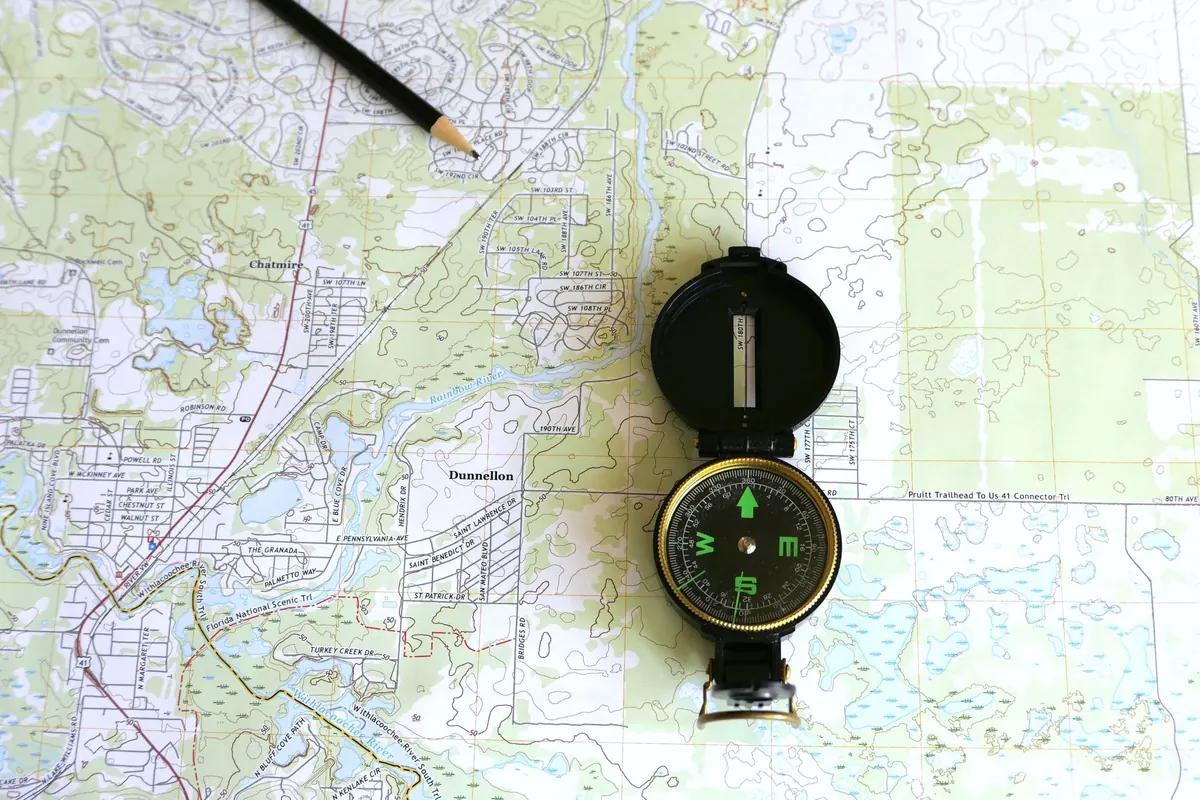
- Get the largest-scale map you can find and read the names out loud. Wells, crosses, gallows, barrows, "fairy", "puck", "hag", "boggle", "dragon". Names are folklore's filing system.
- Check the place-name evidence against the English Place-Name Society volumes or the Ordnance Survey Name Books. A field called "Cunning Close" is a small miracle.
- Walk the boundaries of one parish, all the way round. Note odd gates, old trees, springs, ruined chapels. Beating the bounds was a real custom with real routes.
- Read the church. Carvings, graffiti, scratched crosses, reused stones, memorials to people with unusual deaths. It is the most heavily annotated building in the village.
- Search the local newspaper archive for the 1880s–1930s. That is where nineteenth-century folk belief meets the printed word, and where you find the accounts nobody reprinted.
- Listen more than you ask. Don't arrive with a questionnaire. Arrive with an interest, and let people tell you what they think matters. The best informants are the ones who contradict you.
- Record the provenance, not just the story. Who told it, when, where, and who told them. Folklore without provenance is just a nice story.
- Ask before you publish. Family stories and anything involving living people or ongoing observances need consent. Fairy forts, holy wells and certain trees still carry real obligations. Treat them as though they might.
A short list of things to be suspicious of
- "Ancient pagan origin." Frequently asserted, rarely evidenced. Hutton has spent forty years dismantling the claims, and almost nothing has been rebuilt in their place.
- Druids. The only reliable sources on Druids are written by their opponents, and the modern variety is an eighteenth-century invention with a good costume department.
- Ley lines. Invented in the 1920s by an amateur with a ruler and a taste for coincidence.
- The word "Celtic". Used in popular writing to mean "vaguely old, vaguely Irish, vaguely nice", and almost always concealing the fact that nobody looked anything up.
- The Victorians' better instinct. If a tale ends with a moral, a fairy wedding and a description of the fairy queen's dress, you are probably looking at a rewriting.
- The internet's folklore. Some creepypasta is genuinely good and will be legitimate folklore in eighty years. Almost none of it has a source, so cite nothing before checking.
- The idea that folklore is dying. It isn't. It has moved — into superstition about exams and sport, into warning children about roads instead of boggarts, into ghost stories about the workplace. The old material persists in local history groups, calendar customs, and the persistent human habit of telling stories about the places we live.
Start with one place. Learn it well enough that you can see the seams between the Victorian retelling, the local anecdote and the genuinely old story. Then move one parish over, and do it again, and you will have understood something that no general book can teach you: that British folklore is not a subject with a syllabus, but a set of habits that the landscape has been keeping up for a very long time.